What Did Ham Do To Noah In The Tent & the Canaanite Curse
This post contains affiliate links. As an Amazon Associate, we earn from qualifying purchases.
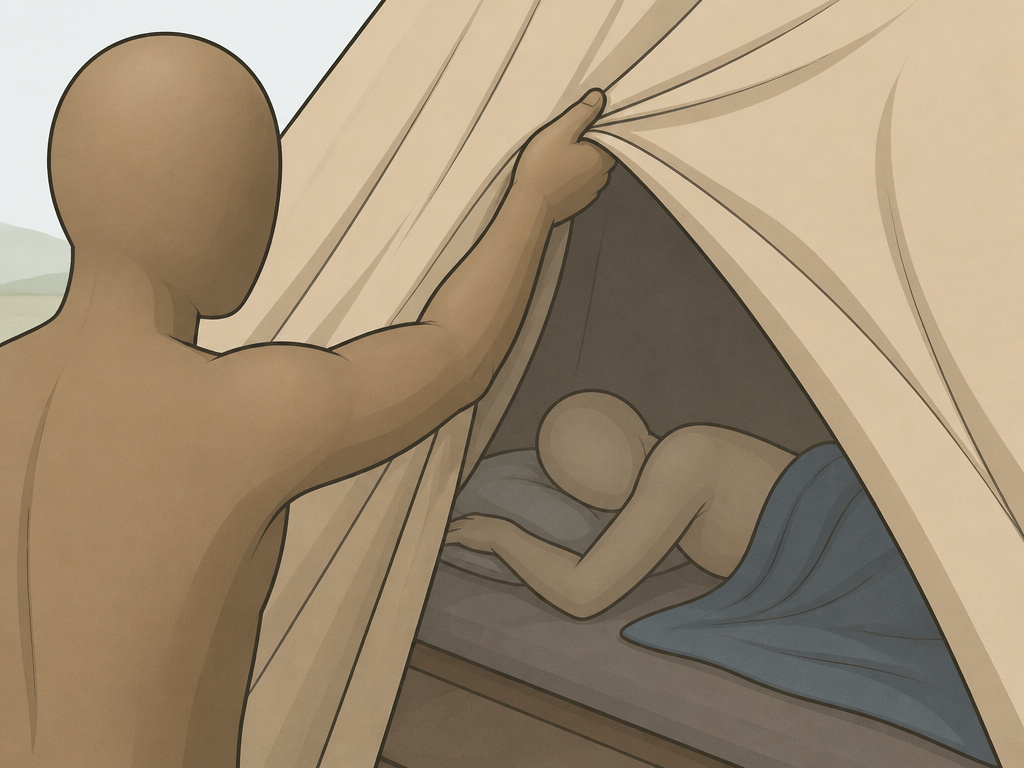
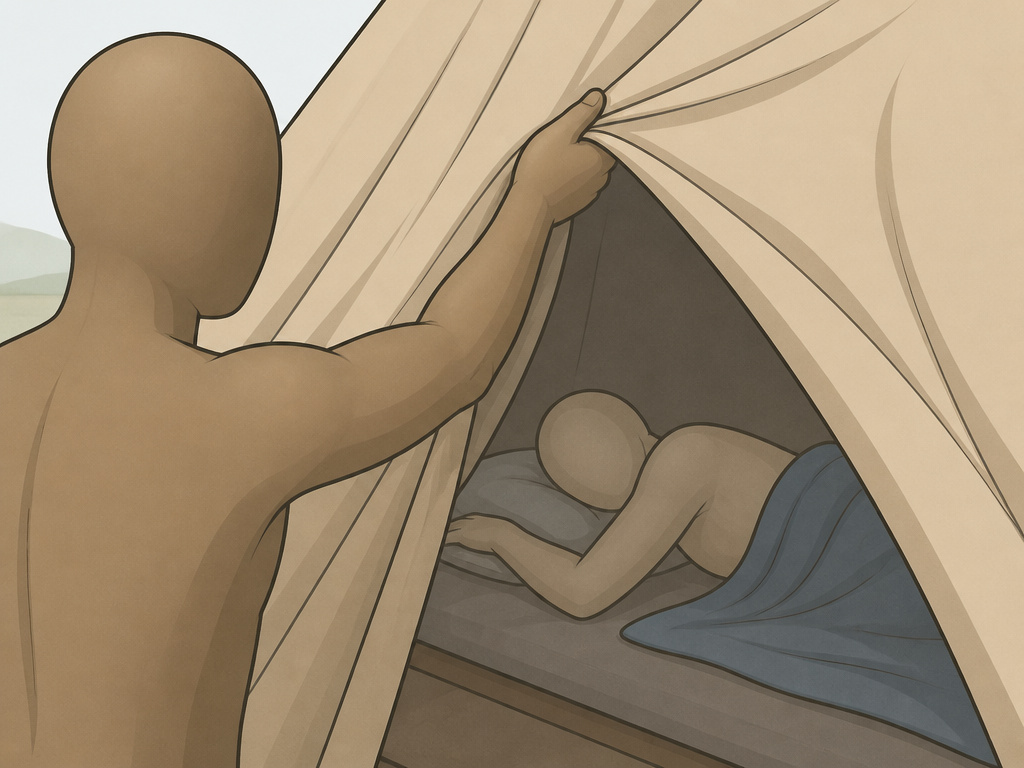
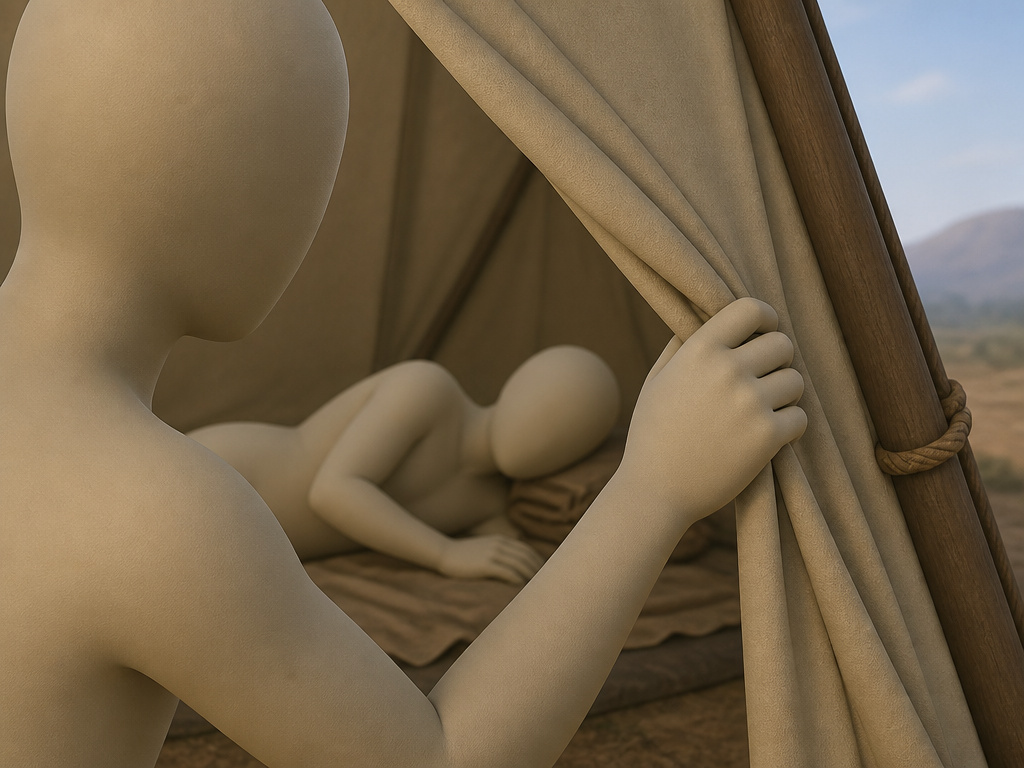
Ham saw his father Noah naked and drunk inside a tent, then told his brothers about it instead of covering him. This act of disrespect and dishonor, exposing his father’s vulnerability, led Noah to curse not Ham, but Ham’s son Canaan, declaring he would be a “servant of servants” to his brothers.
Most retellings stop there. They miss the weight of the act in its ancient context, and they often misplace the curse entirely. The story isn’t about a simple peek. It’s about a fundamental breach of family honor that was believed to ripple through generations.
This guide breaks down the Genesis 9 account, separates the biblical text from centuries of rabbinic and scholarly speculation, and traces the real-world impact of this ancient curse.
Key Takeaways
- The primary biblical text (Genesis 9:20-27) states Ham saw Noah’s nakedness and told his brothers, an act of profound disrespect.
- Noah’s curse fell specifically on Canaan, Ham’s son, not on Ham himself, a detail that fueled later interpretive theories.
- Major ancient interpretations, recorded in sources like the Talmud, proposed Ham committed a sexual act against Noah, such as castration or sodomy.
- Historically, this narrative was used to justify the subjugation of the Canaanites by the Israelites, seen as a fulfillment of Noah’s prophecy.
- Understanding this story requires seeing honor/shame culture, not modern privacy norms.
The Biblical Account in Genesis 9
The source material is short, stark, and leaves much unsaid. You find it in Genesis 9:20-27. After the Flood, Noah plants a vineyard, makes wine, and drinks too much. He passes out, naked, inside his tent.
His son Ham enters, sees him in this state, and exits. Ham then finds his two brothers, Shem and Japheth, and tells them what he saw. Their response is the model of filial piety. They take a garment, walk backwards into the tent so they won’t see their father, and cover him.
When Noah awakes and learns “what his youngest son had done to him,” he speaks a curse. It is directed at Canaan, Ham’s son: “Cursed be Canaan! The lowest of slaves will he be to his brothers.” He then blesses Shem and Japheth.
The text of Genesis 9:22-23 (NIV) reads: “Ham, the father of Canaan, saw his father naked and told his two brothers outside. But Shem and Japheth took a garment and laid it across their shoulders; then they walked in backward and covered their father’s naked body. Their faces were turned the other way so that they would not see their father naked.”
The immediate questions are obvious. Why curse Canaan for Ham’s sin? What exactly did Ham “do” that warranted such a severe, generational punishment? The Bible’s silence on these points is what opened the door to 2,000 years of interpretation.
TL;DR: Genesis says Ham saw Noah naked and told his brothers, a grave dishonor. Noah then cursed Ham’s son Canaan, not Ham, to servitude.
What Ham Actually Did: Disrespect Versus Deeper Transgression
The plain reading is about honor, not nudity. In the ancient Near Eastern honor-shame culture this story springs from, a father’s nakedness represented his vulnerability and dignity. A son’s duty was to protect that dignity, to cover the shame. Ham did the opposite. He exposed it. He made his father’s private failing a subject of gossip with his brothers.
His act wasn’t a casual mistake. It was a deliberate choice to diminish his father’s authority and elevate himself by sharing the spectacle. Shem and Japheth’s careful, backward approach underscores the gravity of the taboo Ham blithely violated.
But the phrase “what his youngest son had done to him” (Genesis 9:24) nags at readers. The Hebrew verb ‘asah (“had done”) can imply a concrete, physical act. Combined with the curse skipping a generation, it made ancient scholars suspect the written text was hiding something more horrific.
This is where the non-commodity, scholarly interpretations enter. They aren’t in the Bible, but they are critical to understanding the story’s legacy.
The most prominent theories come from the Talmud. Rabbi Abba Arikha argued Ham castrated Noah. His reasoning was midah keneged midah, measure for measure. Noah deprived Ham of a fourth son (via the curse on Canaan), so Ham must have deprived Noah of the ability to have a fourth son. Other sages, like Rabbi Samuel, argued Ham sodomized Noah. He pointed to the verb “saw” being used in contexts of sexual assault elsewhere in Genesis.
Modern academic scholarship adds another layer. Some propose Ham’s sin was sexual intercourse with Noah’s wife, his own mother, making Canaan the product of an illicit union. This theory attempts to explain the curse’s specific target.
| Interpretation | Proposed Action | Rationale / Source |
|---|---|---|
| Plain Text | Saw & told; dishonored father | Genesis 9:22-23 |
| Castration Theory | Ham castrated Noah | Talmud (Rabbi Abba Arikha); “measure for measure” |
| Sodomy Theory | Ham sexually assaulted Noah | Talmud (Rabbi Samuel); linguistic analogy to Genesis 34 |
| Maternal Incest Theory | Ham slept with Noah’s wife | Modern scholarly hypothesis; explains curse on Canaan |
Common mistake: Assuming Ham’s act was merely “seeing” Noah naked by modern standards. In its cultural context, the seeing was a deliberate act of dishonor, and the telling was a public shaming that fractured family hierarchy.
The text itself supports the dishonor reading. The extra theories are ancient and modern attempts to solve the puzzle of the redirected curse. For a camper, the core lesson is clear: respect the shelter and the privacy of those within it. The dynamics of a family tent, or any close-quarters shelter like many compact two-person tents, hinge on mutual respect.
Why Was Canaan Cursed and Not Ham?
This is the central mystery. Noah wakes up and curses his grandson, not the son who wronged him. The text gives no explicit reason. This gap has fueled the interpretive theories above. If Ham did something that fundamentally altered Noah’s lineage or legacy, cursing Ham’s lineage in return makes a twisted kind of sense.
The castration theory fits neatly: Ham removes Noah’s future sons, so Noah removes Ham’s son (Canaan) from dignified lineage. The maternal incest theory also fits: if Canaan is the product of Ham’s sin, cursing the child condemns the sinful union.
There’s a simpler, more textual possibility. In Genesis 9:18, Ham is already identified as “the father of Canaan.” Canaan is introduced before the incident. This literary framing may signal that the story is ultimately an etiology, an explanation for why the Canaanites, descended from Canaan, became subservient to the Israelites, descended from Shem. The curse is less about punishing Ham and more about explaining a later historical reality: the Israelite conquest of Canaan.
The narrative logic might be: Ham’s character flaw is inherited and magnified in his son’s line, justifying their future fate. It projects a later ethnic and political conflict back into the primordial family story.
TL;DR: The curse on Canaan, not Ham, is either narrative foreshadowing of the Canaanites’ fate or a “measure for measure” punishment for a heinous physical crime the text only hints at.
The Historical and Cultural Impact of the Curse
This story was never just a family drama. It became a foundational text used to explain and justify ethnic relations and conquest in the ancient world. The Israelites, tracing their lineage to Shem (the blessed brother), saw the Canaanites (descendants of the cursed Canaan) as destined for subjugation.
This belief is woven into the Ham’s biblical narrative. The curse provided a divine sanction for the wars and conflicts described later in the Books of Joshua and Judges. The Canaanites were to be “servants of servants,” a people condemned by their forefather’s sin.
The historical weight of this curse cannot be overstated. For centuries, it was used as a theological justification for displacement and war, shaping the map of the ancient Levant.
Tragically, in later centuries, this narrative was twisted further during the transatlantic slave trade. Some European theologians misapplied the “Curse of Ham” to all African peoples, falsely claiming Black people were the cursed descendants of Canaan destined for servitude. This was a gross misuse of the text, the Canaanites were a Near Eastern people, not African, but it demonstrates the destructive power this story was given.
For the outdoor enthusiast, it’s a stark reminder that the stories we tell about places and people matter. They shape how we treat the land and its history. Choosing a shelter, whether a featherweight tent for two for a remote trek or a raised sleeping shelter for car camping, is a modern act of claiming space. It’s worth knowing the long, often painful history of how such claims have been justified.
Common Misconceptions and Modern Readings
Let’s clear the ground of common errors. First, Ham was not turned Black. That is a later, racist corruption of the text with no biblical basis. Second, the curse was not on all of Ham’s descendants. The Bible names four sons of Ham: Cush, Mizraim, Put, and Canaan. Only Canaan is cursed. Cush is associated with regions like Ethiopia, Mizraim with Egypt, Put with Libya. Great ancient civilizations arose from Ham’s line, unaffected by this specific curse.
Third, and most importantly for a honest reading: the story is not about the evil of alcohol or nudity. It’s about the betrayal of familial duty and honor. Noah’s drunkenness is a narrative device that creates vulnerability. The sin is in the exploitation of that vulnerability by a son.
Modern readers often struggle with the punishment seeming disproportionate to the crime (if the crime was just “seeing and telling”). This dissonance is what drives scholars to look for the unstated, worse crime. It also reminds us that ancient morality focused on communal stability and hierarchical order. An act that undermined the patriarch threatened the entire family structure. The punishment was meant to restore that order decisively.
When you’re evaluating gear for your own family or group, think about trust and respect. A reliable tent for two campers is a shared shelter. Its strength depends on the mutual care of its occupants, much like Noah’s tent.
Frequently Asked Questions
Why did Noah curse Canaan instead of Ham?
The Bible doesn’t explicitly say. Leading theories suggest it was either a “measure for measure” punishment for a severe physical sin (like castration) against Noah, or a literary device to explain the later historical subjugation of the Canaanite people by the Israelites.
What is the “Curse of Ham” usually referring to?
Colloquially, it refers to the curse Noah pronounced in Genesis 9:25. However, this is a misnomer. The curse was actually placed on Ham’s son, Canaan. The correct term is the “Curse of Canaan.”
Did Ham have sex with Noah?
The biblical text does not say this. This idea is a modern scholarly hypothesis (that Ham slept with Noah’s wife) or an ancient Talmudic interpretation (that Ham sodomized Noah). These are attempts to explain the severity of the curse and its target, but they are not stated in Scripture.
Who are the descendants of Canaan today?
The ancient Canaanites were a collection of peoples in the Levant (modern-day Israel, Palestine, Lebanon, Syria, Jordan). Their direct, distinct ethnic line was largely absorbed or displaced millennia ago. There is no single modern ethnic group that identifiably constitutes “descendants of Canaan.”
How did this story get used to justify slavery?
Later European and American slave traders and apologists radically misapplied the story. They incorrectly claimed African peoples were descended from Canaan and thus destined for servitude under Noah’s curse. This was a theological error used to support a horrific economic system.
The Bottom Line
The story of Ham and Noah in the tent is a compact, explosive tale about honor, shame, and consequences. At its simplest, it condemns the act of exposing a parent’s weakness for personal gain. At its most complex, it reveals how ancient societies used family stories to explain national conflicts and destinies.
The curse fell on Canaan, a decision that has puzzled readers for millennia and spawned theories of unseen violence. This narrative later took on a terrible life of its own, being twisted to justify historical conquests and the atrocity of slavery.
When you zip up your own tent, be it a lightweight solo shelter or a spacious two-person backpacking tent, you’re creating a private space of vulnerability and trust. The ancient lesson of Genesis 9 remains: what happens in the tent, and how we speak of it outside, carries a weight far heavier than the nylon overhead. Respect that space.