How To Tent Prime Rib: Master the Pull Temp & Resting Time
This post contains affiliate links. As an Amazon Associate, we earn from qualifying purchases.
To tent a prime rib perfectly, pull it from the oven 5–10°F below your target final temperature. Let it sit uncovered for 5–10 minutes to release steam, then loosely drape it with heavy-duty foil or cover it with a lid for 15–30 minutes. This allows carryover cooking to finish the job while keeping the crust crisp and the juices locked in.
I’ve spent years testing gear in the wild, from my trusty canvas tent in a snowstorm to my kitchen on a holiday morning. The principles are the same: manage heat and moisture, or face the consequences. A prime rib roast is no different. That beautiful, expensive cut is a test of thermal management, and the “tenting” step is where most cooks fail. They either smother it in foil the second it’s out, creating a soggy, steamed disaster, or they skip the rest entirely and watch all the flavor pool on the cutting board.
This isn’t just about covering meat with foil. It’s about understanding carryover cooking, the physics of steam, and creating the right microclimate for your roast to finish. Let’s get into the specifics that turn a good roast into a legendary one.
Key Takeaways
- Pull your prime rib at 122–125°F for medium-rare, not 130°F. It will climb another 5–10°F as it rests.
- Wait 5–10 minutes after pulling it from the oven before you even think about foil. This uncovered window vents steam and saves your crust.
- For a standard 4–6 pound roast, rest it for 15–20 minutes total. An 8–10 pound monster needs 25–30 minutes.
- Use Reynolds Wrap Heavy Duty foil draped like a loose roof, or a roasting pan lid for more consistent heat in a cool kitchen.
- If your kitchen is cold (below 65°F), create a stable microclimate by placing the tented roast in a towel-lined cooler preheated with hot water.
What Temperature Should Prime Rib Be When You Pull It?
Your eyes and the clock are liars. Only a reliable probe thermometer tells the truth. The single biggest mistake is pulling the roast at its desired serving temperature. By the time it rests, it will be overcooked.
A prime rib roast pulled from the oven at 125°F for medium-rare will experience carryover cooking of 5-8°F. The serving temperature should end up around 130-134°F.
I learned this principle the hard way not with a roast, but with a frozen water bottle in my tent. On a sub-zero trip, I tucked a sealed bottle of boiling water into my sleeping bag for warmth. I woke up shivering and damp, the trapped steam had condensed on the inside of my bag liner. It taught me that sealing in heat often seals in moisture, ruining the system. A prime rib works the same way: pull it early, and let the residual heat finish the job gently.
Use this chart as your non-negotiable guide. These figures synthesize data from expert sources like ThermoWorks and RecipeTin Eats.
| Desired Doneness | Pull From Oven At | Final Temp After Rest |
|---|---|---|
| Rare | 118–120°F | 124–128°F |
| Medium-Rare (Ideal) | 122–125°F | 129–134°F |
| Medium | 127–131°F | 135–140°F |
| Medium-Well | 131–135°F | 138–145°F |
TL;DR: Your thermometer is your guide. Pull early, and let physics do the rest.
Why You Must Let Prime Rib Sit Uncovered First
Your instinct is to protect that precious roast. Mine too. But covering it immediately is the worst thing you can do.
Common mistake: Smothering the roast in foil the moment it leaves the oven, the trapped steam condenses on the crust in under 5 minutes, turning your perfect bark into a soft, wet blanket.
Set the roast on your cutting board. Walk away. Set a timer for 5 minutes for a smaller roast, 10 for a large one. Listen. That faint, furious sizzle slowing to a quiet murmur? That’s steam, mostly water vapor from the hot surface, escaping. If you trap it under foil, it rains back down. This is why I’m fanatical about ventilation in my four-season hot tents; a sealed environment leads to condensation every time.
This pause also applies the brakes to carryover cooking. The surface begins to cool, which moderates the heat traveling inward. It’s the difference between coasting to a stop and slamming the brakes. One source advocates for immediate tenting to “lock in moisture,” but true moisture retention happens during the rest itself, not from a foil seal. Let the steam out first.
Foil Tent vs. Roasting Pan Lid: Which Is Better?

Not all covers are created equal. Your choice depends on your environment and your gear, much like choosing between a lightweight backpacking hot tents and a sturdy canvas tent for base camp.
The Loose Foil Tent
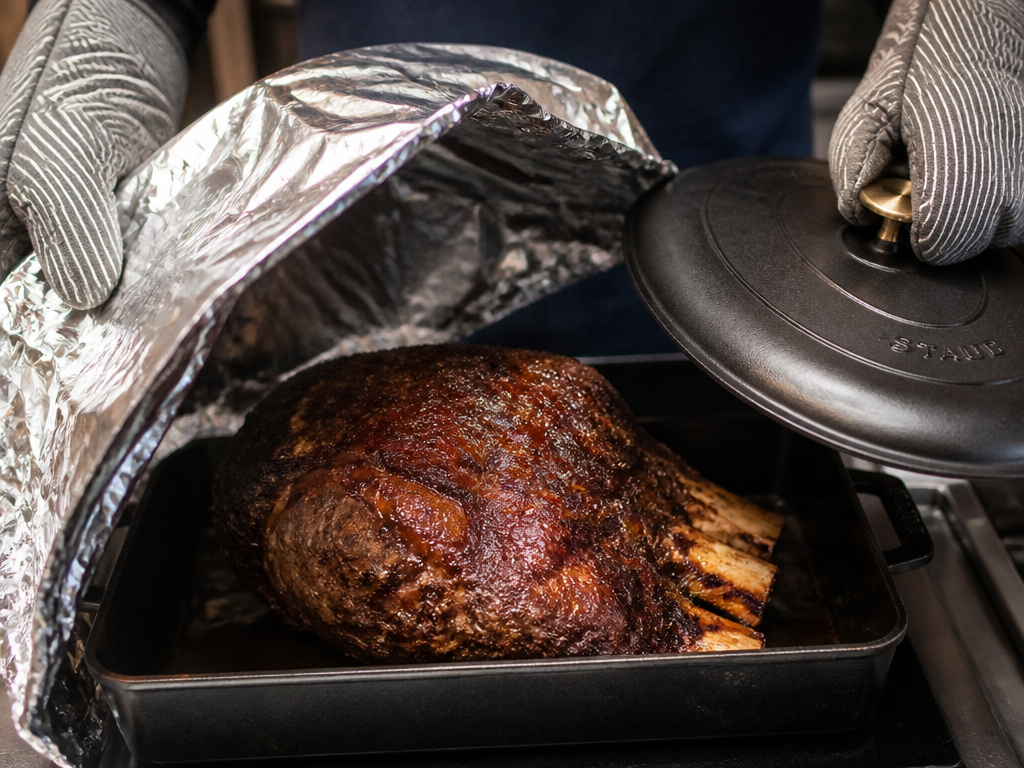
This is the standard. Use a large sheet of heavy-duty foil (I only use Reynolds Wrap Heavy Duty for this) and drape it over the roast to create a peaked, A-frame roof. Do not crimp the edges to the board. You want a tent, not a sealed crypt. This method allows for slight airflow and is perfect for a standard 15–20 minute rest in a warm kitchen.
The Roasting Pan Lid
If your roasting pan came with a lid, or if you have a large Dutch oven lid (like from a Le Creuset), use it. A lid creates a more consistent, humid microclimate with less risk of the foil collapsing onto the crust. It’s superior for longer rests (25–30 minutes) or in a cool kitchen. The principle is identical to why a well-sealed tent holds heat better than a tarp, enclosed, stable air is a better insulator.
| Covering Method | Best Use Case | Key Consideration |
|---|---|---|
| Loose Foil Tent | Warm kitchens (>68°F), shorter rests (15-20 min), most home cooks. | Must be truly loose. If foil touches meat, it can create soggy spots. |
| Roasting Pan Lid | Cool/drafty kitchens, longer rests (25-30 min), cooks using a low-and-slow method. | If concerned about crust softness, remove lid for last 15-20 min of cook time. |
How Long Should a Prime Rib Rest?

Forget the 10-minute rule for steaks. A prime rib is a thermal mass, and it needs time. Rushing this step means all the juices you worked for end up on the board, not in the meat.
- For a 4–6 pound roast: Rest for 15–20 minutes total (including the initial uncovered time).
- For an 8–10 pound roast: Rest for 25–30 minutes total.
During this time, two critical things happen. First, the internal temperature climbs that final 5–10°F to your perfect doneness. Second, the juices, which were driven toward the center by the intense heat, redistribute evenly throughout the muscle fibers. Slice into it too soon, and you’ll see a flood of pink liquid, that’s flavor leaving for good.
Common mistake: Carving a prime rib after only 10 minutes, the center is still aggressively pushing heat and moisture outward, resulting in a dramatic juice loss on the cutting board and drier outer slices.
What If Your Kitchen Is Cold or Drafty?
A cold room is the enemy of a proper rest. It wicks heat away too fast, stalling the carryover cook and leaving you with a lukewarm roast. You need to create a stable microclimate.
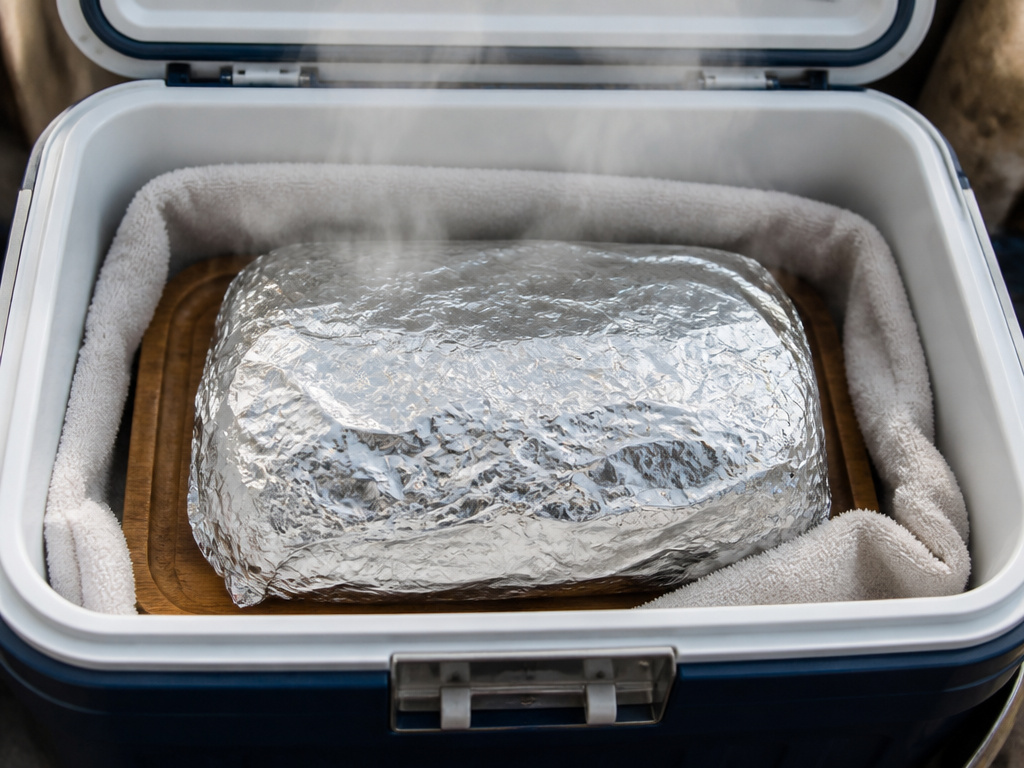
- The Cooler Trick: This is my go-to for holiday cooks in a drafty house. Take a standard cooler, fill it with hot water from the tap, let it sit for 2 minutes to warm the walls, then dump the water. Line it with a towel, place your tented roast inside (still on its board), and close the lid. It becomes a perfect, portable warming drawer.
- The Oven Hack: No cooler? Turn your oven off, prop the door open with a wooden spoon for 60 seconds to bleed off the intense heat, then place the tented roast inside and shut the door. The residual gentle warmth is ideal.
This is the exact same logic behind using a portable wood stoves inside a winter camping tents with stove jacks. You’re not adding violent heat; you’re preventing catastrophic heat loss to maintain a perfect finishing environment.
The Step-by-Step Process for a Perfect Rest
Follow this sequence religiously. The order is everything, just like setting up your tent camping equipment before the sun goes down.
- Pull at the Right Temp. The instant your probe (I trust my ThermoWorks Smoke X4) hits the pull temperature from the chart, get the roast out of the oven. Transfer it to a cutting board, leaving the probe in.
- The Uncovered Pause. Set a timer. Do nothing for 5–10 minutes. No poking, no covering. This is when you finish your side dishes.
- Tent or Lid. After the timer goes off, loosely drape your heavy-duty foil or place your roasting pan lid over the roast. Ensure no part is sealed tight.
- Complete the Rest. Start your main rest timer based on the roast’s weight. Let physics work.
- Verify and Carve. Check the final internal temperature. It should be in your target “Final Temp” range. Slice against the grain and serve immediately.
TL;DR: Pull early, pause uncovered, cover loosely, rest patiently. That’s the mantra.
Frequently Asked Questions
Do you have to tent a prime rib?
While not absolutely mandatory, tenting is highly recommended. The loose cover keeps the surface from cooling too quickly during the extended rest, ensuring the entire roast stays warm for serving without continuing to cook aggressively.
Can I use parchment paper instead of foil?
No. Parchment paper is not a barrier to steam or heat. It will allow the roast to cool too quickly and won’t create the gentle warming environment you need. Stick with heavy-duty aluminum foil or a proper lid.
What if I don’t have a roasting pan with a lid?
loose foil tent works perfectly well. For a more stable environment, you can invert a large, heat-safe bowl or another baking sheet over the roast, propping it up with small ramekins or balls of foil to create an air gap.
How do I keep my prime rib warm for more than 30 minutes?
For extended holding (up to an hour), use the towel-lined cooler method described above. The insulated environment will keep the roast at a perfect serving temperature without any risk of overcooking.
Why is my prime rib still tough and chewy?
Overcooking is the most common culprit. If you pulled at 130°F or above, carryover cooking pushed it well into the 140s, tightening the proteins and squeezing out moisture. A lack of proper resting can also cause uneven juiciness. Next time, pull at 122–125°F and follow the full rest protocol.
Before You Go
Tenting a prime rib isn’t a garnish step; it’s the final, critical phase of cooking. It requires the same intentionality as choosing the right tent lighting for a campsite or packing your tent camping accessories for comfort. You’re managing an environment. Pull early to harness carryover cooking. Let it breathe to save the crust. Then, create a loose, warm tent to guide it to perfection. Master this, and you’ll transform that majestic cut of beef into a juicy, evenly rosy, and memorably tender centerpiece. Now go light the oven, and set your thermometer.